

Haciendas of Nasca
Dernière mise à jour : 28 nov. 2025
Written by Clélia Abadie.
Date : 1619-1767

Region: South Coast of Peru

The hacienda of San Joseph de la Nasca (currently in the city of San José, in the district of El Ingenio) and the hacienda of San Francisco Xavier de la Nasca (currently in San Javier, in the district of Changuillo) are located in the regions of Nasca and Palpa, on the southern coast of Peru. In Peru, from 1532 to 1821, Spanish colonization led to the importation of more than 100,000 African slaves[1] who served as workers in the haciendas along the Pacific coast (Aguirre 2000:64; Weaver et al. 2024).
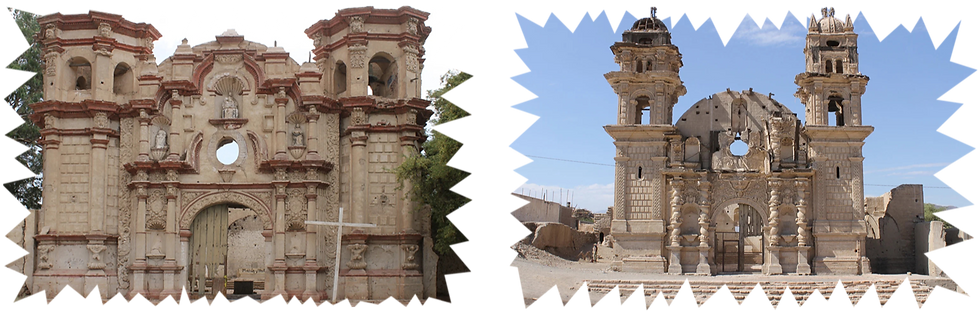
The term "hacienda" refers to a large agricultural exploitation, based on an agrarian social system that was introduced by the Spaniards during the Conquest. These rural properties in America were generally used for the production of various goods such as livestock, sugar cane, cotton, cereal, and vines (Chonchol 1995). As explained by Jacques Chonchol in his book Agricultural systems in Latin America published in 1995, the haciendas were based on a system of compulsory labor (specifically on slave exploitation) for the purpose of production that served both economic and social motivations, allowing the owners of these lands to aspire to political power and a certain status. From a spatial point of view, these areas were structured on large agricultural territories, with architectural structures organized and centered around a main square. The hacienda of San Joseph de la Nasca and that of San Francisco Xavier de la Nasca, for example, have dwellings, production workshops, warehouses, and a large baroque chapel (see the PAHN website). The structural organization of these complexes was not random, and served as a means of exerting pressure, even enslavement, on the slave populations. This is partly what archaeology seeks to demonstrate, and we will return to it later.
The diversity of landscape and climate in Peru has led to regional specialization among the haciendas. Animal husbandry was practiced in the mountains, where vegetation was more abundant, while on the coast, with its arid and desert climate, plantations such as sugar cane, cotton or cereals were preferred (Chonchol 1995). The southern coast of Peru was (and still is today, a very strong colonial heritage) renowed for its vineyards. The hacienda of San Joseph de la Nasca and that of San Francisco Xavier de la Nasca were among the most important. These two vineyard properties were acquired at the beginning of the 17th century (1600s) by the Jesuits (a religious mission). From 1619 and forwards, the ownership and income of these two wine haciendas allowed this religious order to finance the education of Jesuits in Cuzco and in the capital city of Lima (Weaver et al. 2022; Weaver et al. 2023). In 1767, as the Jesuits were being expelled from the Spanish Empire, and therefore from the territories of Nasca, these two haciendas were the two most important and profitable vineyards of the viceroyalty of Peru. The Chilean National Archive indicates that at that time, both haciendas had a population comprising at least 584 enslaved people (Weaver et al. 2022). The paper documents contain names that allowed archaeologists to propose that the exploited population was composed of individuals of African origin or Afro-descendants (born on American lands). Their work involved producing wine, brandy, and pisco (Peru's official alcohol). Some tasks were distributed according to gender: winemaking, forging and ceramic production were reserved for men; while cooking, gardening, and livestock husbandry were assigned to women. In total, the San Joseph domain counted 278 women, men and children slaves; while there are 306 at San Xavier (see the PAHN website).
The colonial period and slavery are notions that could be described as "taboo". Recently, archaeology of colonial periods in the Americas has begun to gain importance and to develop. Modern-day Peru retains an important heritage from these historical periods (especially the southern coast), only they are not sufficiently addressed in the scientific community as well as to the general public. Yet it is necessary and important to inform future generations and to remember what happened. The Nasca Hacienda Archaeological Project (PAHN), which began in 2009, was the first archaeological program to focus on the African diaspora in Peru. The project, led by Dr. Brendan WEAVER, aims to highlight the daily experiences of the African descendant population exploited in these properties and subjected to the religious order of the Jesuits (Weaver 2021). It also seeks to understand the role of these Afro-Andean populations in the construction of modern Peruvian society and to decolonize narratives (Weaver and Fohn 2022:195). This multidisciplinary approach is also motivated by a participatory, discourse-guided approach with local descendant populations (Weaver and Fohn 2022:183). In fact, the project is a way of commemorating these forced and exploited workers, whose identity have been invisibilized and enslaved over several generations. The researchers' work also includes studying the colonial records to identify the origins of the enslaved people – those born free in Atlantic Africa, and their descendants – from their family names, as well as studying the architectural organization of the chapels, that give information on the Jesuits' religious discourse. The recent results of this project are clearly presented on the PAHN website, which I strongly encourage you to visit.
[1] The abolition of slavery in Peru took place in 1854.
References cited: see below the French text
Haciendas de Nasca
Rédigé par Clélia Abadie.
L’Hacienda de San Joseph de la Nasca (actuellement ville de San José, dans le district de El Ingenio) et l’hacienda de San Francisco Xavier de la Nasca (actuellement San Javier, dans le district de Changuillo) se localisent dans les régions de Nasca et de Palpa, sur la côte sud du Pérou. Au Pérou, de 1532 à 1821, la colonisation espagnole a entraîné l'importation de plus de 100 000 esclaves africains[1] qui servaient notamment en tant que main-d’œuvre dans les haciendas le long de la côte Pacifique (Aguirre 2000 : 64 ; Weaver et al. 2024).
Le terme hacienda renvoie à une grande exploitation agricole reposant sur un système social agraire introduit par les Espagnols à la période de la Conquête. De manière générale, l’organisation de ces propriétés rurales en Amérique servait à la production de biens divers tels que l’élevage du bétail, l’exploitation de la canne à sucre, du coton, des cultures céréalières, des vignes (Chonchol 1995). Comme l’explique Jacques Chonchol dans son ouvrage Systèmes agraires en Amérique latine publié en 1995, les haciendas reposaient sur un système de travail obligatoire (concrètement sur l'exploitation d’esclaves) dans un but de production qui servait des motivations économiques, ainsi qu’à des motivations sociales, permettant aux propriétaires de ces domaines d’aspirer à un pouvoir politique et à un certain statut. D’un point de vue spatial, ces domaines se structurent sur des grands territoires agricoles, avec des structures architecturales organisées et recentrées autour d’une place principale. L’hacienda de San Joseph de la Nasca et celle de San Francisco Xavier de la Nasca présentent par exemple des habitations, des ateliers de production, des entrepôts et une grande chapelle de style baroque (cf. site internet du PAHN). L’organisation structurelle de ces complexes n’était pas laissée au hasard et servait de moyen de pression, voire d’asservissement pour les populations d’esclaves. C’est en partie ce que l’archéologie cherche à démontrer et nous y reviendrons plus tard.
La diversité de paysage et de climat au Pérou a entraîné une spécialisation régionale des haciendas. L’élevage d’animaux se pratiquait dans les montagnes, régions où la végétation était plus abondante, tandis que sur la côte, climat aride et désertique, les plantations telles que la canne à sucre, le coton ou les céréales étaient privilégiés (Chonchol 1995). La côte sud du Pérou était (et l’est toujours actuellement, héritage colonial très fort) reconnue pour l’exploitation des vignes. L’hacienda de San Joseph de la Nasca et celle de San Francisco Xavier de la Nasca étaient parmi les plus importantes. Ces deux propriétés viticoles ont été acquises au début du 17e siècle (années 1600) par les Jésuites (mission religieuse). À partir de 1619, la possession et les revenus de ces deux haciendas viticoles ont permis à cet ordre religieux de financer l’éducation des jésuites à Cuzco et dans la capitale Lima (Weaver et al. 2022 ; Weaver et al. 2023). En 1767, au moment de l’expulsion des Jésuites de l’Empire espagnol et donc des territoires de Nasca, elles représentaient les deux vignobles les plus importants et rentables de la vice-royauté du Pérou. Les archives nationales du Chili indiquent qu’à ce moment-là, les deux haciendas avaient une population comprenant au moins 584 personnes réduites en esclavage (Weaver et al. 2022). Les documents papiers présentent des noms qui ont permis aux archéologues de proposer que la population exploitée fût composée d’individus d’origine africaine ou afro-descendants (nés sur les terres américaines). Leur travail consistait à produire du vin et du brandy, le pisco (alcool officiel du Pérou). Certaines tâches étaient réparties selon le genre : la vinification, la forge et la production céramique étaient réservés aux hommes ; tandis que la cuisine, la jardinerie et l’élevage étaient attribués aux femmes. Au total, le domaine de San Joseph a compté 278 esclaves femmes, hommes et enfants ; tandis que l’on en compte 306 à San Xavier (cf. site internet du PAHN).
La période coloniale et l’esclavage sont des notions que l’on peut qualifier de “tabou”. Ces dernières années, l’archéologie des périodes coloniales dans les Amériques commence à prendre de l’importance et à se développer. Le Pérou actuel garde un grand héritage de ces périodes historiques (notamment la côte sud), seulement elles sont trop peu abordées dans la communauté scientifique comme au grand public. Il est pourtant nécessaire et important d’informer les générations à venir et de se souvenir de ce qui s’est passé. Le Projet Archéologique des haciendas de Nasca (PAHN) qui a débuté dans les années 2009 est le premier programme archéologique qui s’intéresse à la diaspora africaine au Pérou. Le projet, porté par le Dr. Brendan WEAVER, a pour but de mettre en lumière l’expérience quotidienne de la population d’ascendance africaine exploitée dans ces propriétés et soumise à l’ordre religieux des jésuites (Weaver 2021). Il cherche aussi à comprendre le rôle de ces populations afro-andines dans la construction de la société péruvienne actuelle et à décoloniser les récits (Weaver et Fohn 2022 : 195). Cette approche pluridisciplinaire est également motivée par une approche participative guidée par un discours avec les populations descendantes locales (Weaver et Fohn 2022 : 183). De fait, le projet est un moyen de commémorer ces travailleurs forcés et exploités, dont l’identité a été invisibilisée et asservie sur plusieurs générations. Le travail des chercheurs passe aussi bien dans l’étude des registres pour faire un état des lieux des provenances de populations nées libres en Afrique Atlantique, de leurs descendants à partir des noms de familles, mais aussi dans l’étude de l’organisation architecturale des chapelles divulguant le discours religieux des jésuites. Les résultats récents de ce projet sont présentés de manière très claire sur le site internet du PAHN. Je vous invite grandement à consulter leur site internet.
[1] L’abolition de l’esclavage au Pérou a lieu l’année 1854.

Bibliography :
Aguirre, C. (2000). La población de origen africano en el Perú: De la esclavitud a la libertad (The population of African origin in Peru: From slavery to freedom). In Lo africano en la cultura criolla, Carlos Aguirre, editor, Fondo Editorial del Congreso de la República, Lima-Perú, pp. 63–78.
Chonchol, J. (1995). « II - La conquête et l’héritage colonial des Espagnols et des Portugais (du xvième au xviiième siècle) ». Systèmes agraires en Amérique latine, Éditions de l’IHEAL.
Weaver, B. J. M., Calderon J., and Fhon Bazán, M.A. (2024). “Aesthetics of Afro-Andean Smoking Culture: Early Modern Peruvian Tobacco Pipes at the Edge of the Atlantic World.” Arts. 13(5).
Weaver, B. J. M., Muñoz L. A. , & Durand K. (2023). “From Slavery to Servitude: Transformations and Continuities in Hacienda Labor, Wellbeing, and Foodways in Eighteenth- and nineteenth-century Nasca. Latin American Antiquity.
Weaver, B. J. M., (2022). “Reflections on ‘material histories’ and the archaeology of slavery in Peru.” Colonial Latin American Review 31(4):591-598.
Weaver, B. J. M., (2022). “La estética política, espectadores artísticos y la esclavitud: Las haciendas jesuitas de Nasca, Perú” [Political aesthetics, artistic audiences, and slavery: The Jesuit haciendas of Nasca, Peru]. Revista de Arqueología Histórica Argentina y Latinoamericana. 15(2):12-37.
Weaver, B. J. M., Fohn M. A. (2022). “La arqueología como instrumento para la descolonización de las representaciones afroperuanas” [Archaeology as an instrument for the decolonization of Afro-Peruvian representations]. In Narrativas Subalternas: Voces desde la Arqueología Peruana, edited by Henry Tantaleán & Luís Muro. Pp. 173-196. Lima (Perú): IFEA.
Weaver, B. J. M., Fohn M. A. and Quispe L. S. (2022). “Heritage and the Archaeology of Afro-Peru: Community Engagement in the Valleys of Nasca.” Historical Archaeology 56(1):131-152.
Weaver, B. J. M. (2021). La estética política, espectadores artísticos y la arqueología de la esclavitud: las haciendas jesuitas de Nasca, Perú. Revista de Arqueología Histórica Argentina y Latinoamericana, 15(2), 8-33.
Webography :
The Haciendas of Nasca Archaeological Project : https://www.pahnperu.org/pahn-en


